



Whether you grew up watching Sesame Street, are a lover of classical music or stay informed by listening to All Things Considered, public media has impacted your life. When the United States Congress voted in July 2025 to rescind two years of federal funding, which led to the dissolution of the
Corporation of Public Broadcasting in January 2026, the future of this and other programming was in jeopardy as public media organizations around the country were left scrambling to cover a $1.1 billion deficit.
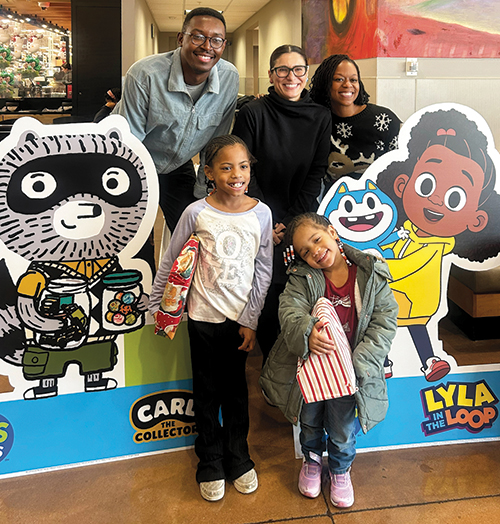
ThinkTV, which carries local PBS children’s programming, provides free, high-quality educational programming that helps millions of children develop literacy and STEM skills.
Locally, the impact was substantial, with Dayton Public Radio, ThinkTV and WYSO-FM projected to lose a combined $3 million annually. This deficit brought to light the critical need for outside support and the uncertainty many nonprofits face when relying on government funding.
“We learned the hard way that the federal government cannot be relied upon to subsidize public service journalism. The only way a public radio station can survive and thrive in today’s environment is to have extremely robust local support,” said Luke Dennis, general manager of WYSO and president of Miami Valley Public Media, who saw his organization’s annual budget cut by a projected $300,000. “Because our local community has stepped up in such a big way this year, I’m proud to say we have not had to cut programs or lay off staff.”
In the months following the announcement, many Dayton Foundation fund holders responded by collectively making nearly $150,000 in regular and additive grants – an almost 350 percent jump over the prior year’s period – from their charitable funds to Dayton Public Radio, ThinkTV and WYSO.
Gifts like these help public media organizations allocate funding where it’s most needed and enable them to provide informative and educational programming to connect individuals in the community. This is particularly important for those who wouldn’t otherwise have access to local news and programming because of paywalls that restrict content unless a user pays or subscribes.
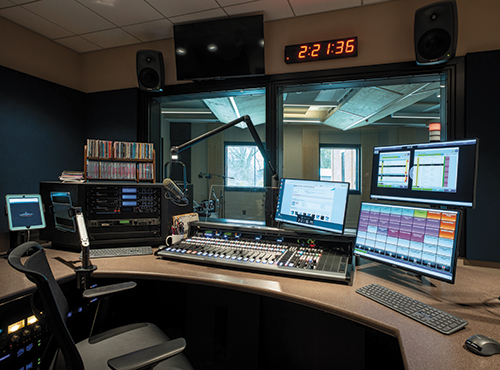
An estimated 70,000 individuals in Southwest Ohio and around the world listen to WYSO each week on the radio and through its digital stream.
“WYSO’s news is different. It aims to produce mission-driven, fact-based journalism that strives to improve lives and build community. We aren’t chasing clicks or sensational headlines,” Luke said. “Our reporters cover stories no one else does. They seek solutions to the thorniest problems, dig into investigations and hold the powerful accountable. They also help you get to know your neighbors better and bring you moments of joy.”
Kitty Lensman, CEO of ThinkTV, echoes that sentiment, emphasizing her organization’s mission is to strengthen the communities they serve through educational and diverse programs and services that “inspire and inform, educate and engage, and foster citizenship and culture.”
Carrying out this mission became significantly more challenging last fall, when it lost more than $2.6 million in federal funding and $500,000 in state funding – or 20 percent of its annual budget.
“The absence of federal funding is and will be crippling to many nonprofits….The best way to help make up for this loss is by making a financial contribution.”
–Kitty Lensman, CEO of ThinkTV
“The absence of federal funding is and will be crippling to many nonprofits,” Kitty said. “Therefore, donations from local foundations and the community become even more critical. The best way to help make up for this loss is by making a financial contribution.”
ThinkTV’s programming is particularly important, Kitty points out, because of its educational reach to more than 100 school districts, serving 20,000 teachers and over 400,000 students.
“Fifty percent of American families cannot afford a formal preschool program for their children, so they often rely on local PBS children’s programming to help their children learn their shapes, colors and numbers to prepare for kindergarten,” she said.
Like WYSO and ThinkTV, Dayton Public Radio also provides irreplaceable services for the community. When it went on the air in the early 1980s, Dayton was the largest city in America without its own classical music station. Today, Dayton is home to one of the few remaining full-time, non-commercial classical music stations in the country. With a $140,000 reduction in its annual budget because of the rescission package, President and CEO Shaun Yu and his staff had to look for ways to restore that funding.
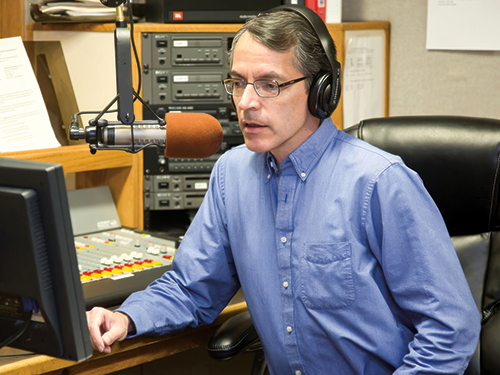
Programs like the one hosted by Discover Classical’s afternoon host, Adam Alonzo (pictured above), aim to enhance the lives of its listeners by guiding them to greater knowledge, appreciation and enjoyment of classical music and the fine arts.
“Ongoing, annual support is difficult to replace. While we’ve been able to weather that storm without cutting staff or services, it does mean we have to make up that deficit every year through other sources,” Shaun said. “Grants, events and corporate funding are part of our overall revenue stream, but it’s the listeners who make up 60 to 70 percent of our total revenue.”
For nearly 35,000 weekly listeners, Discover Classical 88.1/89.1/89.9 FM provides local performances, arts information and companionship. From re-broadcasting concerts to encouraging aspiring classical musicians through its Young Talent Search and annual instrument drives, Dayton Public Radio strives to promote a timeless art form rooted in the belief that music has the power to change lives and should be accessible to all.
“I have adored Discover Classical for so long and, with each passing year, I understand more and more how much of a valuable contributor to the local culture this station is!” wrote one supporter.
Strong local support from listeners and viewers ensures Dayton Public Radio, ThinkTV and WYSO can continue to provide the invaluable programming that so many individuals have come to love and rely on to enrich their lives.
“I just wanted to share with you how much you mean to me in my daily life,” said Amy Boland, a Dayton Foundation fund holder and longtime WYSO supporter. “Because of the way you deliver [the news], you give me hope. You don’t sensationalize it. I feel that WYSO is a tremendous member of our community, and anything I can do to support them as active members of the community I would do so.”
To learn more or to support these local public media organizations, visit discoverclassical.org (Dayton Public Radio), wyso.org (WYSO) and thinktv.org (ThinkTV).